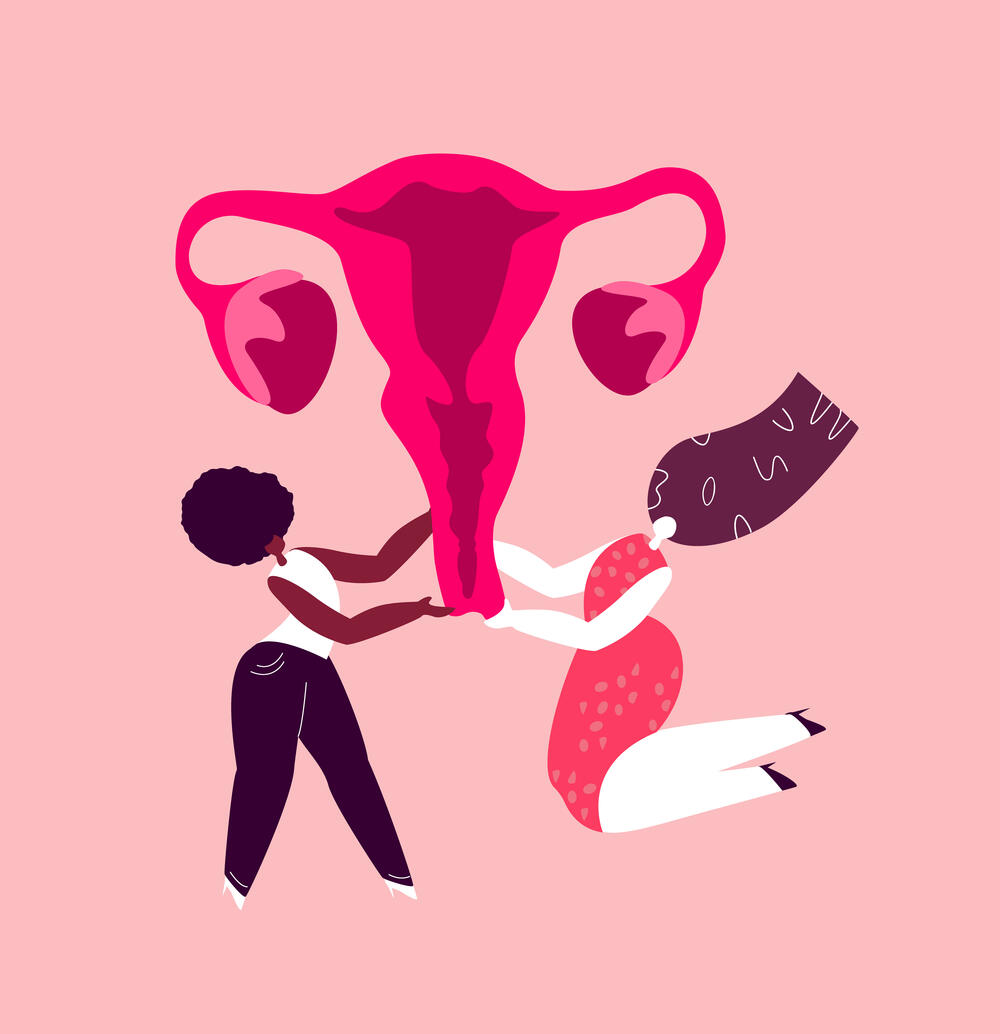
Cartoon illustration of two women holding up a uterus
An official website of the State of Georgia.
The .gov means it’s official.
Local, state, and federal government websites often end in .gov. State of Georgia government websites and email systems use “georgia.gov” or “ga.gov” at the end of the address. Before sharing sensitive or personal information, make sure you’re on an official state website.
Still not sure?
Call 1-800-GEORGIA to verify that a website is an official website of the State of Georgia.
October 02, 2026
In the United States, over one million women reach menopause each year. Menopause is a life transition that affects each person differently. Most women experience perimenopausal symptoms, anatomical changes, and emotional changes throughout the transition. It is important to talk to your doctor when you notice symptoms.
Many of the uncomfortable symptoms associated with perimenopause may be treated with medications. However, there are non-medical management options include maintaining a healthy diet rich in fruits and vegetables, practicing good sleep hygiene, and getting regular exercise. It’s recommended to speak with your doctor about which approach is best for you.
In the years leading up to menopause, changes within the ovaries cause estrogen levels to drop. Decreased estrogen is what triggers many uncomfortable perimenopausal symptoms to occur throughout the entire body. During these years, ovulation becomes irregular, menstrual periods become irregular, energy consumption decreases, fat cells enlarge, weight gain occurs, bone density decreases and changes to the body’s shape become noticeable. This transition period is Perimenopause. Perimenopause usually happens between ages 45–55 and is often a gradual process. Perimenopause typically lasts around 4 years, but it may last from 2–8 years. It is important to note you may still become pregnant during this time.
Going 12 months without a menstrual period is called menopause.2 Menopause may happen between ages 30–50, or even later. Most people experience menopause at the age of 51. Menopause can result from a natural decline of hormones, surgery, chemotherapy and radiation, or primary ovarian insufficiency. While it is impossible to predict when exactly menopause will occur, family history may give you a good idea of when you might experience this life change.
Nearly 75% of all women experience physical, mental and emotional changes during perimenopause. These may include: