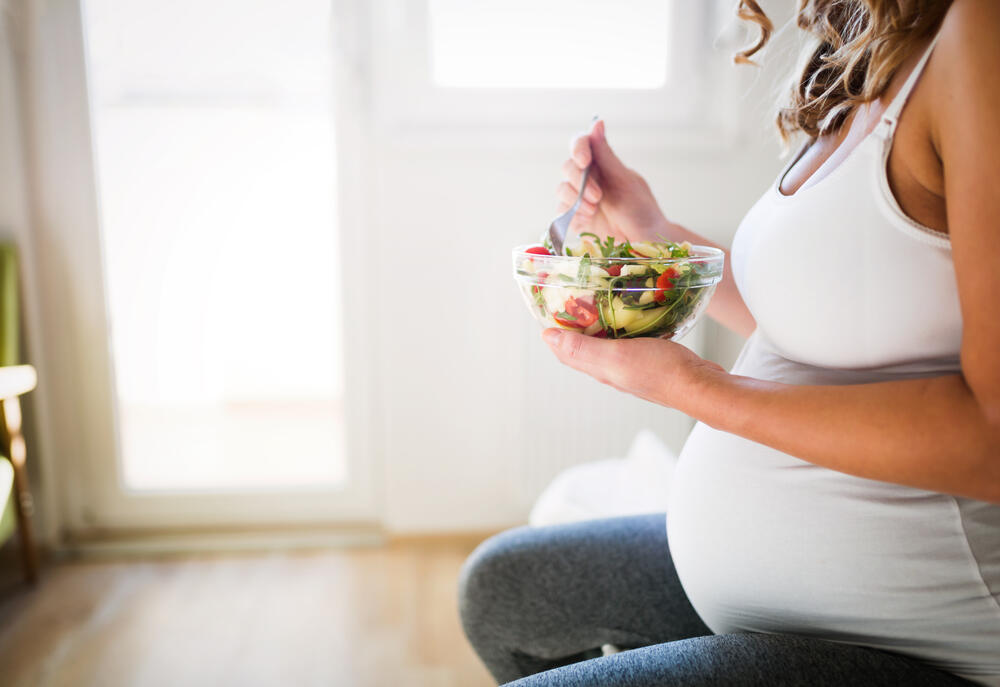
pregnant woman eating salad
An official website of the State of Georgia.
The .gov means it’s official.
Local, state, and federal government websites often end in .gov. State of Georgia government websites and email systems use “georgia.gov” or “ga.gov” at the end of the address. Before sharing sensitive or personal information, make sure you’re on an official state website.
Still not sure?
Call 1-800-GEORGIA to verify that a website is an official website of the State of Georgia.
March 20, 2026
When you’re pregnant, you will likely need approximately an extra 200-400 calories a day. These calories should come from a variety of nutrient-dense foods—high in vitamin and minerals—including:
During pregnancy, the basic principles of healthier eating remain the same — get plenty of fruits, vegetables, whole grains, lean protein and healthier fats. However, a few nutrients in a pregnancy diet deserve special attention.
Iron needs are doubled during pregnancy. The body needs this iron to make more blood to supply oxygen to the baby. If the mother doesn’t consume enough iron during pregnancy, she could develop iron deficiency, anemia, develop headaches, or become fatigued. Lean red meat, poultry and fish are good sources of iron. Prenatal vitamins typically contain iron.