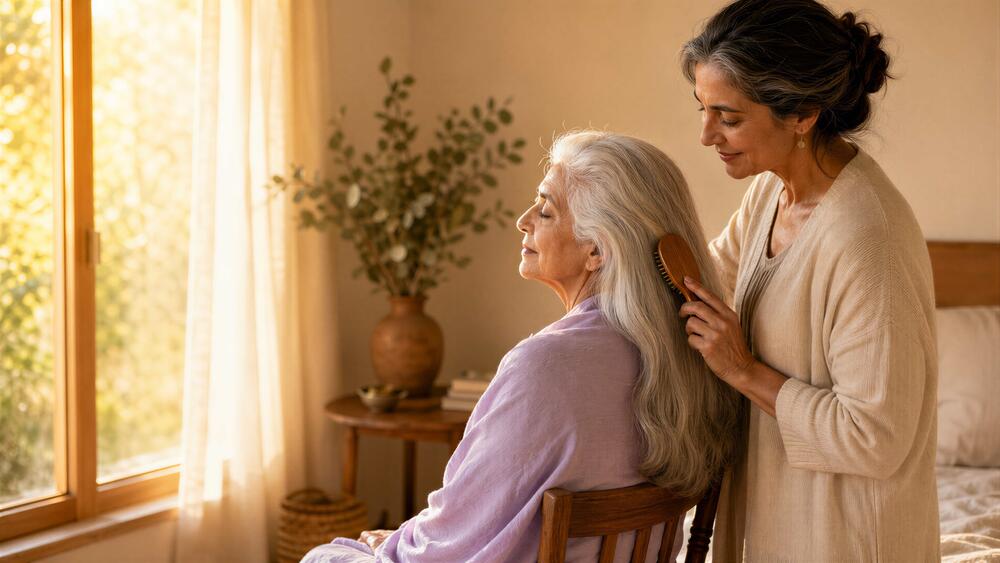
Adult woman brushing elderly mother's hair
An official website of the State of Georgia.
The .gov means it’s official.
Local, state, and federal government websites often end in .gov. State of Georgia government websites and email systems use “georgia.gov” or “ga.gov” at the end of the address. Before sharing sensitive or personal information, make sure you’re on an official state website.
Still not sure?
Call 1-800-GEORGIA to verify that a website is an official website of the State of Georgia.
May 20, 2026
Many adults today find themselves caring for both their children and their aging parents at the same time. This group is often referred to as the “sandwich generation” because they are balancing responsibilities on multiple sides of life at once.
Between work deadlines, family schedules, caregiving responsibilities, and everyday tasks, it can become difficult to find time to rest and recharge. Over time, this constant pressure can affect both physical and mental well-being.
While caregiving can be rewarding, it can also lead to stress and burnout if personal wellness is consistently placed last.
Caregivers may experience:
Recognizing these signs early can help prevent long-term burnout.
You do not have to handle everything alone. Lean on family members, friends, or community resources when support is available.
Even short breaks throughout the day can help improve mental wellness. Taking a walk, stretching, listening to music, or stepping away from screens for a few minutes can help you recharge.
Using calendars, reminders, or shared schedules can help reduce stress and make daily responsibilities feel more manageable.
Caregivers often put their own needs last. Try to prioritize sleep, nutrition, movement, and preventive care whenever possible.
Being a caregiver is an important role, but taking care of yourself is equally important. Small steps toward rest, balance, and support can make a meaningful difference in your overall well-being.